

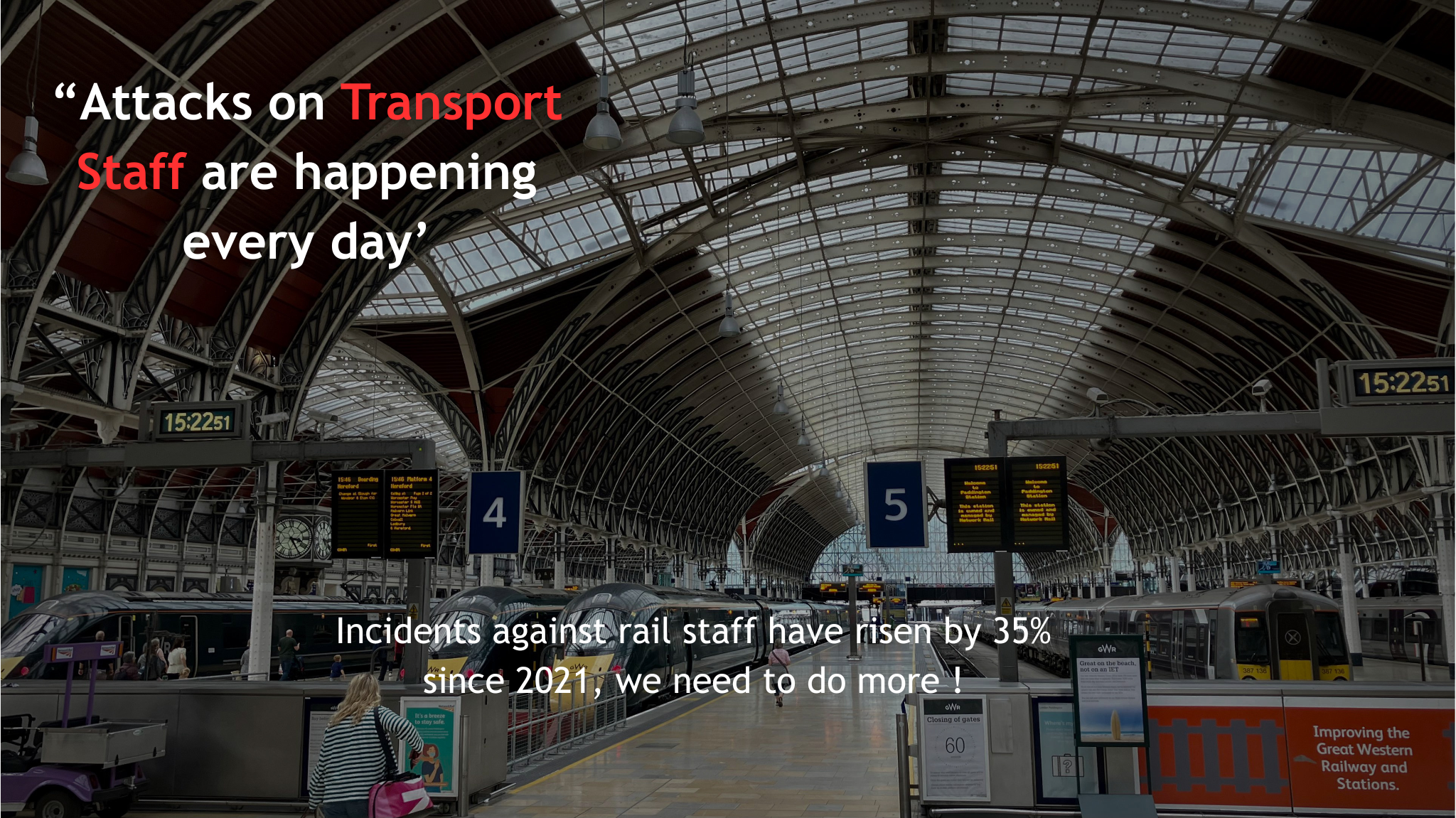
Anti-social behaviour on the UK rail network is becoming an increasing concern for rail operators, frontline staff, and passengers alike. Across stations, trains, and public-facing transport environments, frontline rail staff are facing rising levels of abuse, threats, intimidation, and physical assault while simply carrying out their roles.
Recent reporting from the RMT has highlighted the scale of assaults against rail staff and the growing concerns around frontline worker protection across the transport industry.
But this is not solely a transport issue. Across frontline industries, organisations are seeing the effects of wider societal pressures:
- higher public frustration
- increased tension in public spaces
- growing operational complexity
- more anti-social behaviour directed at frontline workers
For rail operators, the challenge is becoming increasingly difficult: how do organisations identify emerging operational risks early enough to intervene before incidents escalate?
Assaults Against Rail Staff Are Increasing
Frontline rail staff play a critical role in keeping transport networks operating safely and efficiently. Yet many employees now face verbal abuse, aggressive behaviour, and physical threats as part of their daily working environment.
Anti-social behaviour on railways can have significant operational consequences, including:
- increased staff absence
- reduced workforce morale
- operational disruption
- reputational damage
- growing pressure on incident response teams
In safety-critical and regulated environments such as rail, reactive responses alone are no longer sufficient. By the time patterns become visible through traditional reporting processes, risks may have already escalated.
The Problem with Reactive Incident Management in Rail
Many rail organisations still rely on fragmented operational data and retrospective reporting processes to manage incidents. Critical operational information is often spread across:
- spreadsheets
- PDFs
- disconnected reporting systems
- manual reports
- siloed operational teams
This creates several operational challenges:
- delayed visibility of emerging risks
- inconsistent incident analysis
- limited operational oversight
- reduced ability to proactively manage anti-social behaviour trends
Without structured operational intelligence, organisations are often forced into reactive decision-making rather than preventative intervention.
Why Operational Visibility Is Critical for Rail Staff Safety
Improving rail staff safety requires more than incident recording. Rail operators need the ability to understand:
- where incidents are increasing
- which locations are becoming higher risk
- what operational patterns are emerging
- how external factors influence frontline demand
Operational visibility allows organisations to move beyond hindsight and toward proactive risk management. When incident data, operational reporting, and contextual intelligence are brought together into a single operational view, organisations can:
- identify recurring behavioural patterns
- detect operational hotspots earlier
- prioritise interventions more effectively
- support evidence-led decision-making
This becomes particularly important during periods of increased operational pressure, service disruption, major public events, school holidays, or heightened passenger demand.
Using Operational Intelligence to Reduce Anti-Social Behaviour
As operational environments become more complex, rail organisations are increasingly exploring predictive and intelligence-led approaches to incident management. Operational intelligence platforms can help organisations:
- improve incident visibility
- identify emerging trends
- monitor operational risk
- support earlier intervention planning
At Apexiar, we've been working closely with rail operators to better understand the operational challenges surrounding frontline safety, anti-social behaviour, and incident management. This collaboration led to the development of AMIS — the Analytical Management Incident System.
AMIS is designed to help organisations operating in complex and regulated environments improve operational visibility, incident intelligence, and proactive decision-making.
The platform combines fragmented operational and incident data into a unified, decision-ready operational view, supporting:
- real-time operational intelligence
- predictive analytics
- incident trend analysis
- integrated reporting
- structured operational oversight
By improving visibility and identifying emerging risks earlier, organisations can support more proactive operational responses before incidents escalate further.
Technology Alone Will Not Solve Violence Against Frontline Workers
Technology is not a replacement for frontline support, staffing, training, or public accountability. However, organisations need better operational intelligence to understand:
- where risks are developing
- how operational conditions are changing
- which interventions are most effective
Protecting frontline rail staff requires organisations to move from fragmented reporting and reactive response toward proactive operational management supported by timely intelligence and clear operational visibility.
Because frontline workers deserve to feel safe while keeping critical public services running.
Frequently Asked Questions
Why is anti-social behaviour increasing on railways?
Rail operators are facing increasing levels of anti-social behaviour due to a combination of wider societal pressures, growing public frustration, operational disruption, and increased tension in public-facing environments.
How can rail operators improve frontline staff safety?
Improving rail staff safety requires a combination of operational visibility, proactive incident management, structured reporting, frontline support, and earlier identification of emerging risks and operational hotspots.
What is proactive incident management in rail?
Proactive incident management focuses on identifying trends, risks, and behavioural patterns early, allowing organisations to intervene before incidents escalate rather than relying solely on retrospective reporting.
How can operational intelligence improve railway safety?
Operational intelligence platforms help rail organisations combine operational data, incident reporting, and contextual insights into a single operational view, supporting faster decisions, improved visibility, and more effective risk management.