
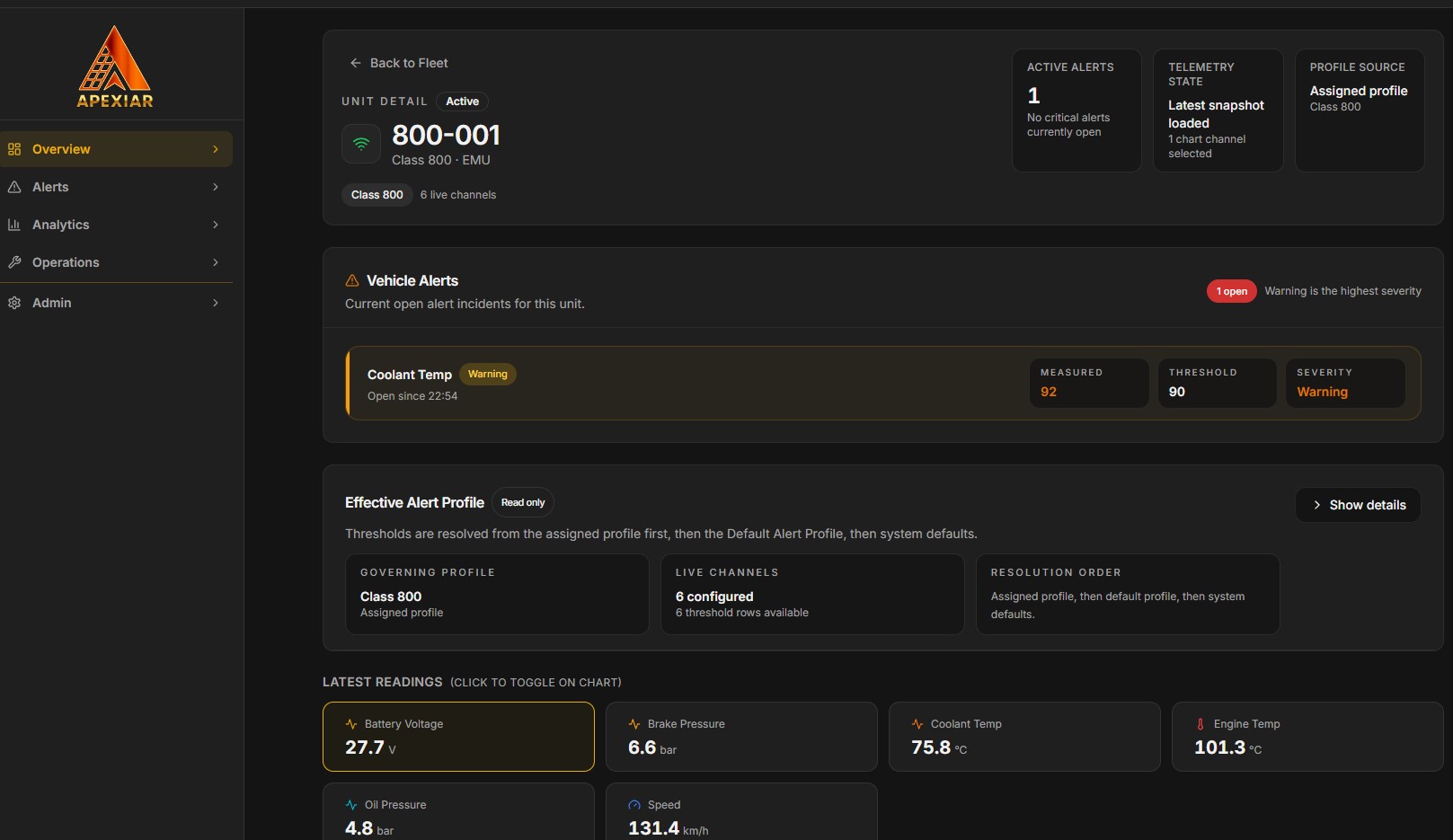
Understand vehicle condition
Use telemetry, alerts and journey context to support investigation and maintenance priorities.
Sectors / Rail
Software, connected sensing, aerial inspection and engineering support for the teams responsible for rail vehicles and infrastructure.
Bring fleet condition, corridor evidence and maintenance context into the decisions that keep railway operations moving.
Across fleet and infrastructure
Use telemetry, alerts and journey context to support investigation and maintenance priorities.
Combine aerial inspection with emerging sensing programmes to investigate asset and infrastructure behaviour.
Bring inspection evidence into re-engineering, selected equipment overhaul and controlled change.
Software & Intelligence
Atom brings rail vehicle telemetry, fleet health, threshold alerts and journey records into view for maintenance and operations teams.
Explore the underlying platforms for technical detail, screenshots and workflows. Artemis supports asset and maintenance management; Axis brings engineering information and connected asset insight together.
Connected Systems / Development programmes
Train Node and Track Node are developing sensing programmes. Their intended uses and engineering targets are distinct from achieved approvals or guaranteed availability.
In development & testing
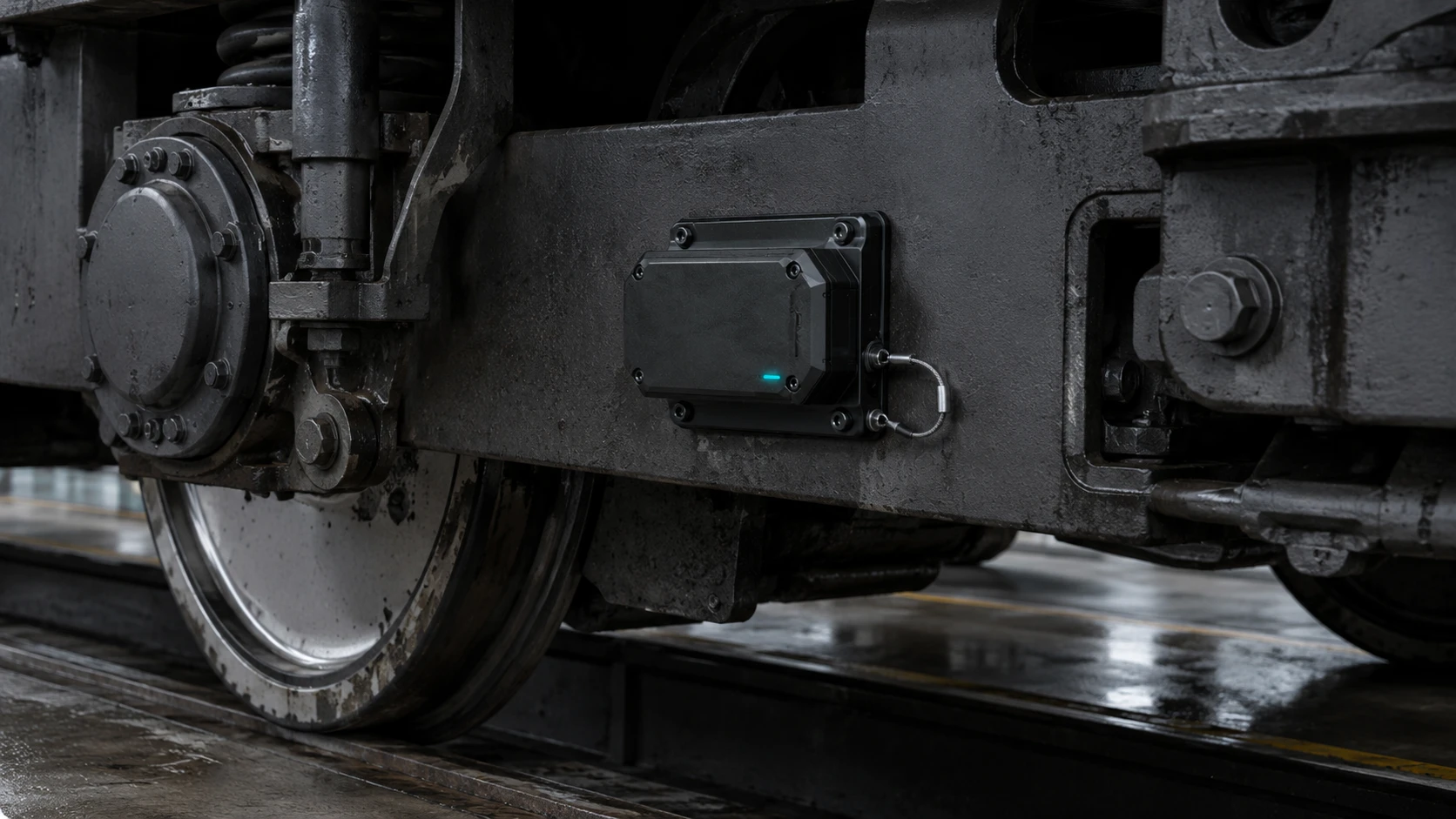
Vehicle-mounted sensing for acceleration, vibration, orientation, location and rail-condition indicators, with edge processing and journey records.
Engineering validation and required railway approvals are targeted for the end of 2026; initial market testing is planned for Q1 2027. These are programme targets.
Train Node programme & optional modules →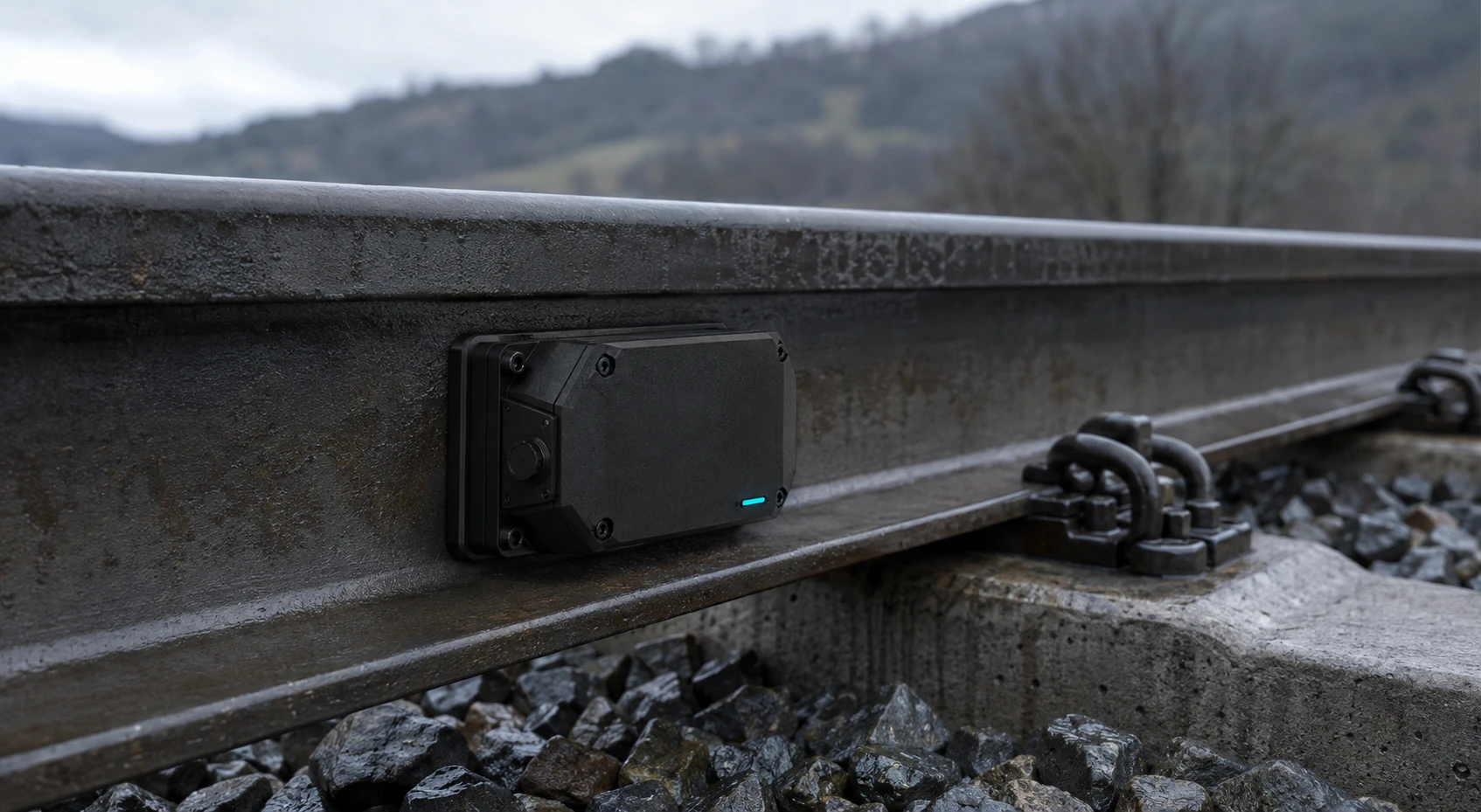
Subject to development & field trials
Track-mounted sensing intended to capture movement, vibration, orientation, temperature and environmental context at the infrastructure.
Final mounting, sensing, power and communications configurations remain subject to development, field trials and railway approval.
Track Node programme & intended applications →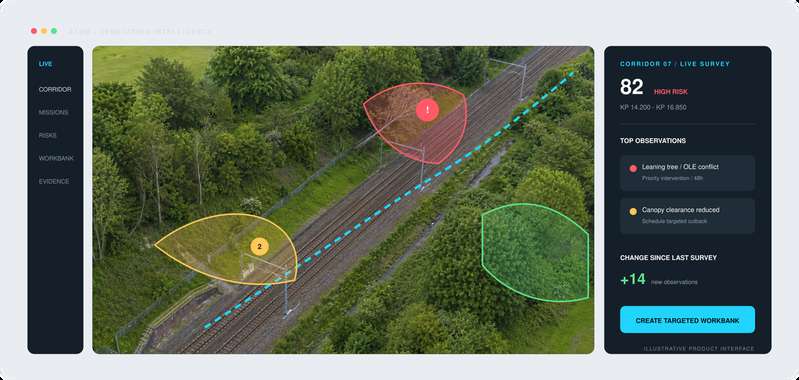
Aerial Intelligence
Use repeat aerial surveys to build vegetation workbanks and support verification of completed work.
Visual and thermal inspection can support assessment of track, structures, earthworks, drainage, vegetation and overhead line equipment, with remote reconnaissance for incident response.
The Gen 1 UAV configuration is operational; Gen 2 remains in engineering development. Aircraft, payloads and integration are defined around the inspection requirement.
Explore rail inspection & vegetation intelligence →Advisory & Deployment
Investigate obsolete components, reconstruct designs and test the route to a practical engineering solution.
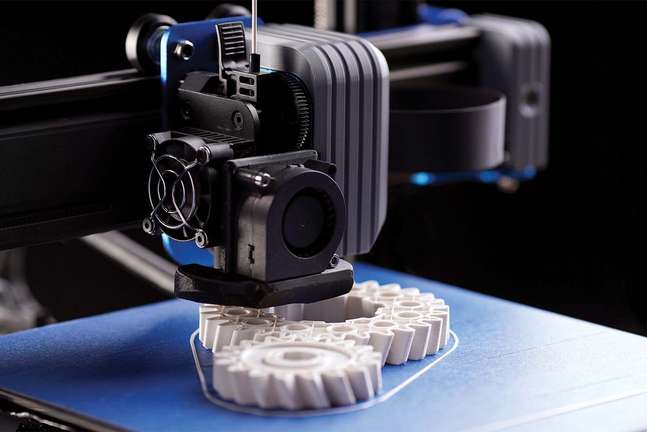
Precision re-engineering combines dimensional capture, CAD and prototyping. Selected auxiliary and electromechanical equipment can be assessed for overhaul and lifecycle extension, supported by technical evidence for return to service.
Start with the requirement
Begin with the asset, the operational question and the evidence needed. Identify the appropriate software, inspection or engineering work, then define integration, validation and deployment requirements with your team.
Explore the four connected capabilities →Tell us about your fleet, infrastructure or engineering challenge. We will help define the next practical step.